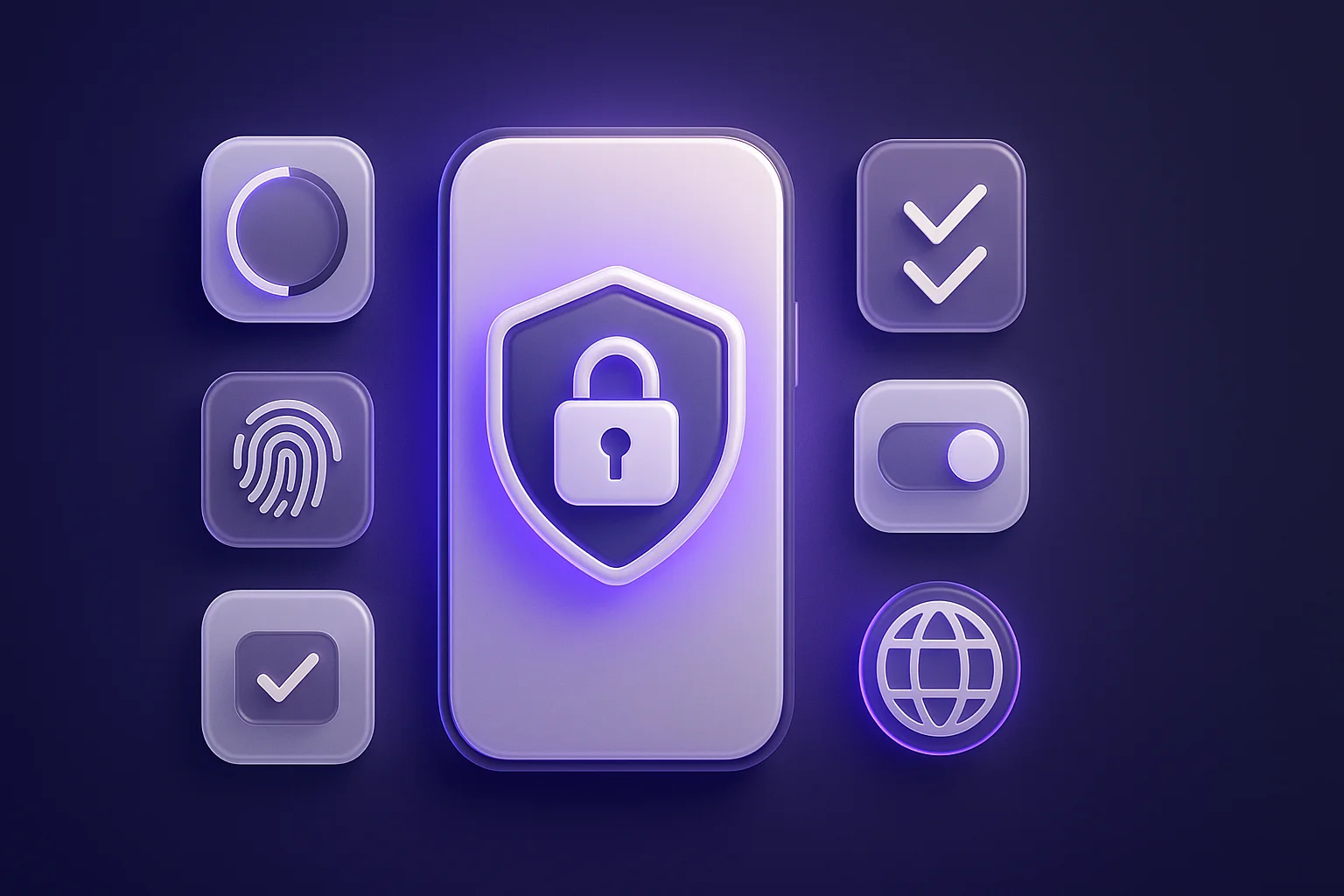
How safe is biometric login in banking apps in 2025?
Written by Laurens Dauchy — tailored for teams in Copenhagen, United States and Europe.
Security engineer; implemented biometric authentication for 30+ banking apps across US & EU.
For biometric login safety in banking apps, I focus on three critical areas: platform security, anti-spoofing measures, and secure implementation. In my experience, most biometric security failures happen because teams trust the technology without understanding the underlying risks.
Think of biometric authentication like a high-security fingerprint scanner: it's incredibly convenient and secure when properly implemented, but vulnerable to sophisticated attacks if not configured correctly. The difference is that your scanner protects real money, not just access.
For deeper references, see Apple LocalAuthentication Framework, Android Security Best Practices, and NIST Digital Identity Guidelines.
Why biometric authentication is critical for banking
Banking apps handle the most sensitive financial data possible, making strong authentication essential. Unlike regular apps, a single compromised account can result in immediate financial losses and regulatory violations. Biometric authentication provides the perfect balance of security and convenience.
- User convenience: Biometric authentication is faster and more user-friendly than passwords.
- Security strength: Biometric data is unique and difficult to replicate or steal.
- Regulatory compliance: PCI DSS and banking regulations require strong authentication controls.
How I implement secure biometric authentication
- Use platform biometric APIs (Face ID, Touch ID, Android BiometricPrompt) for maximum security.
- Store biometric data securely in device keystore; never on servers or in app storage.
- Implement liveness detection and anti-spoofing measures to prevent biometric attacks.
- Combine biometric authentication with other factors for high-value transactions.
- Test biometric implementation with security scans and penetration testing.
// Example: secure biometric authentication (conceptual)
const authenticateWithBiometric = async (userId) => {
  // 1) Check biometric availability
  const isAvailable = await checkBiometricAvailability();
  if (!isAvailable) throw new Error('Biometric not available');

  // 2) Perform biometric authentication
  const result = await performBiometricAuth({
    promptMessage: 'Authenticate to access your banking app',
    fallbackTitle: 'Use passcode'
  });

  if (!result.success) throw new Error('Biometric authentication failed');

  // 3) Generate secure session token
  const sessionToken = await generateSecureSessionToken(userId);

  // 4) Store token securely
  await storeSessionTokenSecurely(sessionToken);

  return { success: true, sessionToken };
};

const performBiometricAuth = async (options) => {
  // Platform-specific implementation
  if (Platform.OS === 'ios') {
    return await FaceID.authenticate(options);
  } else if (Platform.OS === 'android') {
    return await BiometricPrompt.authenticate(options);
  }
};
What are the security risks of biometric login?
| Risk | Impact | Mitigation |
|---|---|---|
| Spoofing Attacks | High | Liveness detection, anti-spoofing measures |
| Biometric Data Theft | High | Secure storage, encryption |
| Device Compromise | Medium | Device integrity checks, secure boot |
| False Positives | Low | Proper threshold tuning, fallback mechanisms |
Default: Liveness detection + Secure storage + Anti-spoofing.
Short walkthrough
Platform guardrails (always on)
- Use platform biometric APIs; never implement custom biometric solutions.
- Store biometric data securely in device keystore; never on servers.
- Implement proper fallback mechanisms; never rely solely on biometrics.
Settings that matter for GDPR/PDPA/GR71
Europe (GDPR) and Southeast Asia (PDPA, GR71) require specific biometric data protection measures. Document biometric processing and maintain audit trails.
Start free scan
Check biometric authentication, security risks, and implementation gaps in minutes
Start free scan✓ 2–3 min scan ✓ No signup required ✓ Instant report
Trusted by 1,200+ banking teams across US & EU
Start free scan
2–3 min • No signup
Key takeaways about biometric login safety in banking apps
- Use platform biometric APIs (Face ID, Touch ID, Android BiometricPrompt) for maximum security.
- Store biometric data securely in device keystore; never on servers or in app storage.
- Implement liveness detection and anti-spoofing measures to prevent biometric attacks.
- Combine biometric authentication with other factors for high-value transactions.
- Test biometric implementation with security scans and penetration testing.
Frequently Asked Questions
Is biometric authentication safe for banking apps?
Yes, when implemented correctly with platform biometric APIs, secure key storage, and proper fallback mechanisms.
What are the security risks of biometric login?
Main risks include spoofing attacks, biometric data theft, and device compromise. Mitigate with liveness detection, secure storage, and multi-factor authentication.
Should I use Face ID or Touch ID for banking?
Both are secure when using platform APIs. Face ID offers convenience, Touch ID offers reliability. Choose based on your user base and security requirements.
Read more
Mobile Wallet App Security Features
Read more →
Preventing Fraud in Fintech Apps
Read more →
Fintech App Secure API Communication
Read more →
Mobile Banking App Data Encryption Tips
Read more →WRITTEN BY LAURENS DAUCHY - FOUNDER OF PTKD
5 October, 2025