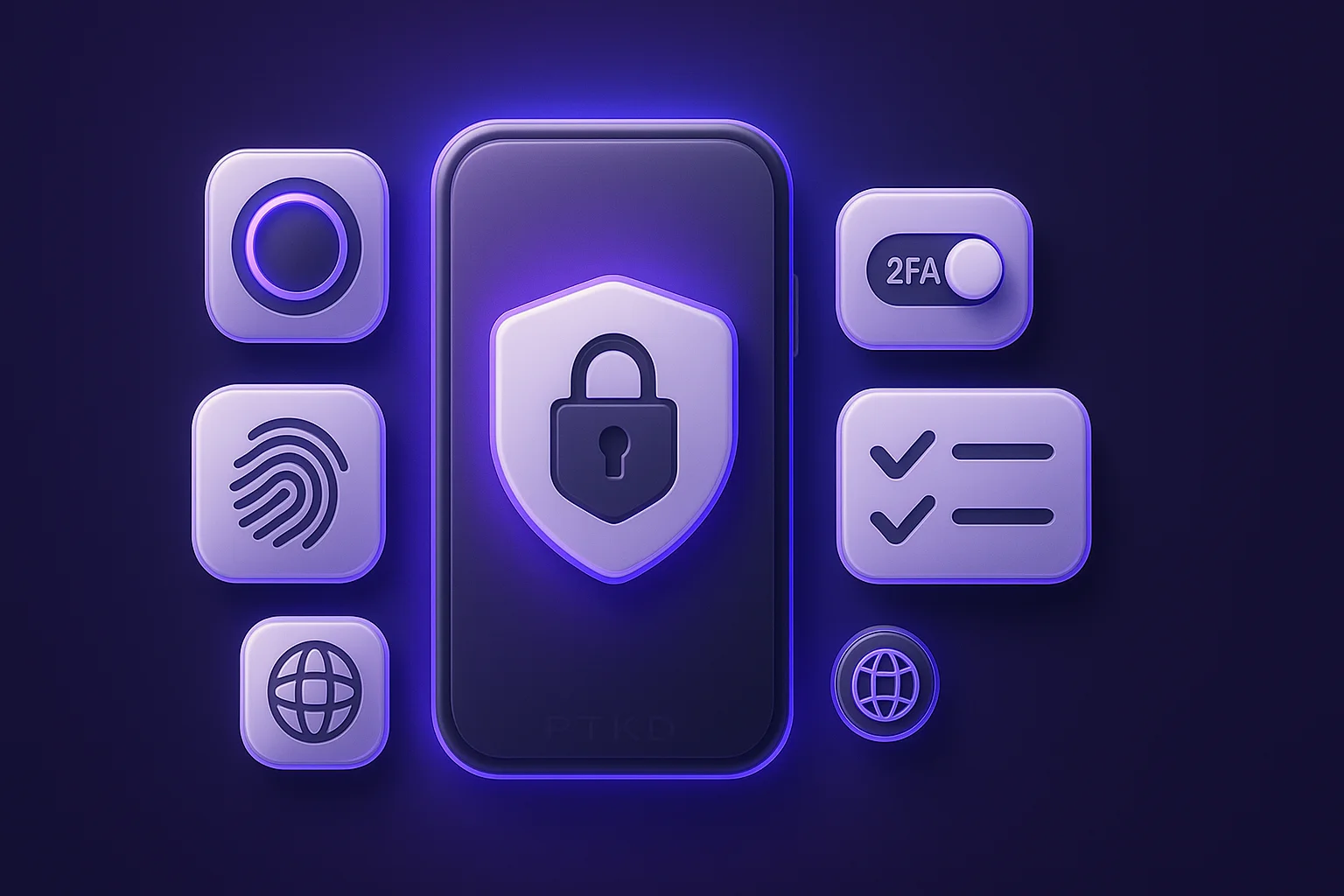
Most mobile security problems are cheap to fix before launch and expensive after, once the app is in users' hands and the binary is out where anyone can inspect it. A pre-launch security audit is the step that catches the common, high-impact issues, exposed secrets, insecure storage, plain HTTP, an over-exposed binary, while they are still easy to change. You do not need a full penetration test to cover the basics; you need a checklist that maps to the categories that actually matter. Here is that checklist, organized so you can work through it before you ship.
Short answer
A pre-launch mobile security audit checks your app against the categories that cause real-world incidents: secrets and storage, cryptography, network, authentication and access, platform configuration, and code protection. Per OWASP MASVS, the highest-value checks are no hardcoded secrets in the binary, sensitive data in secure storage, HTTPS everywhere with no cleartext, access enforced server-side, safe platform configuration like exported components and WebView settings, and no debuggable or private-API issues. Work through each area, fix what you find, and verify the built artifact, since the binary you ship is what an attacker inspects. A pre-submission scan automates much of this and a manual review covers the rest.
What you should know
- Audit before launch: issues are cheap to fix before the binary is out.
- Cover the key categories: storage, crypto, network, auth, platform, code.
- No secrets in the binary: the single highest-value check.
- Verify the built artifact: the shipped binary is what matters.
- Scan plus review: automate the common checks, review the rest.
Why audit before launch?
Because after launch your binary is public and your data is live. Once the app ships, anyone can download and inspect it, so a hardcoded key, an insecure storage choice, or a cleartext endpoint is exposed to the world rather than caught in development, and fixing it means an emergency update and possibly a breach in between. A pre-launch audit moves that discovery earlier, when changing the code is routine and nothing is at stake yet. It also tends to find the same high-impact issues across apps, because the common mistakes are common, so a focused checklist catches most of the risk without a full engagement. The point is to make the cheap fix before launch instead of the expensive one after.
What is on the pre-launch security checklist?
Work through these areas. The table organizes the high-value checks.
| Area | Check |
|---|---|
| Secrets and storage | No hardcoded keys; sensitive data in Keychain or Keystore, not plain storage |
| Cryptography | Strong standard algorithms; keys in the secure store, not the code |
| Network | HTTPS everywhere; no cleartext; valid certificate handling |
| Authentication and access | Tokens stored securely; access enforced server-side, not client-side |
| Platform | Safe exported components, WebView settings, deep links, and permissions |
| Code protection | No debuggable release; no private APIs; sensitive logic not relied on in the client |
| Privacy | Accurate privacy label or Data safety form; privacy manifest complete |
The single most valuable item is the first: confirm no secret ships in the binary, because that one issue, an exposed API key or credential, is both common and high-impact. After that, insecure storage and cleartext traffic are the next most common, followed by platform misconfiguration like an over-exposed component or WebView.
Manual review versus automated scan
Use both, since they catch different things. An automated scan reads the compiled binary and reliably surfaces the mechanical, checkable issues at scale, hardcoded secrets, insecure storage, cleartext traffic, weak crypto, debuggable flags, exposed components, which are exactly the common, high-impact problems on the checklist. A manual review adds the judgment a scan cannot: whether your authentication logic is sound, whether server-side access control is correct, whether the app's specific business logic has flaws. For most apps before launch, a scan covers the bulk of the checklist quickly, and a focused manual review handles the app-specific reasoning. Running the scan against the built artifact is important, because the question is what actually shipped, not what the source looked like in theory.
What to watch out for
The first trap is auditing the source but not the built binary, when the binary is what an attacker inspects and what may contain a secret the source did not obviously reveal. The second is treating "the app works" as "the app is secure," when the dangerous issues are usually invisible at runtime. The third is skipping the audit under launch pressure, which is exactly when the cheap-before, expensive-after tradeoff bites. A pre-submission scan such as PTKD.com (https://ptkd.com) reads your compiled APK, AAB, or IPA against OWASP MASVS and surfaces the storage, network, secret, and configuration issues on this checklist, so you can clear most of it automatically and focus your manual review on the app-specific logic. Run it before you submit, not after a problem appears.
What to take away
- A pre-launch security audit catches common, high-impact issues while they are still cheap to fix, before the binary is public and the data is live.
- Cover secrets and storage, cryptography, network, authentication and access, platform configuration, code protection, and privacy.
- The highest-value check is confirming no secret ships in the binary, followed by insecure storage and cleartext traffic.
- Combine a pre-submission scan such as PTKD.com against the built artifact with a focused manual review of your app-specific logic.