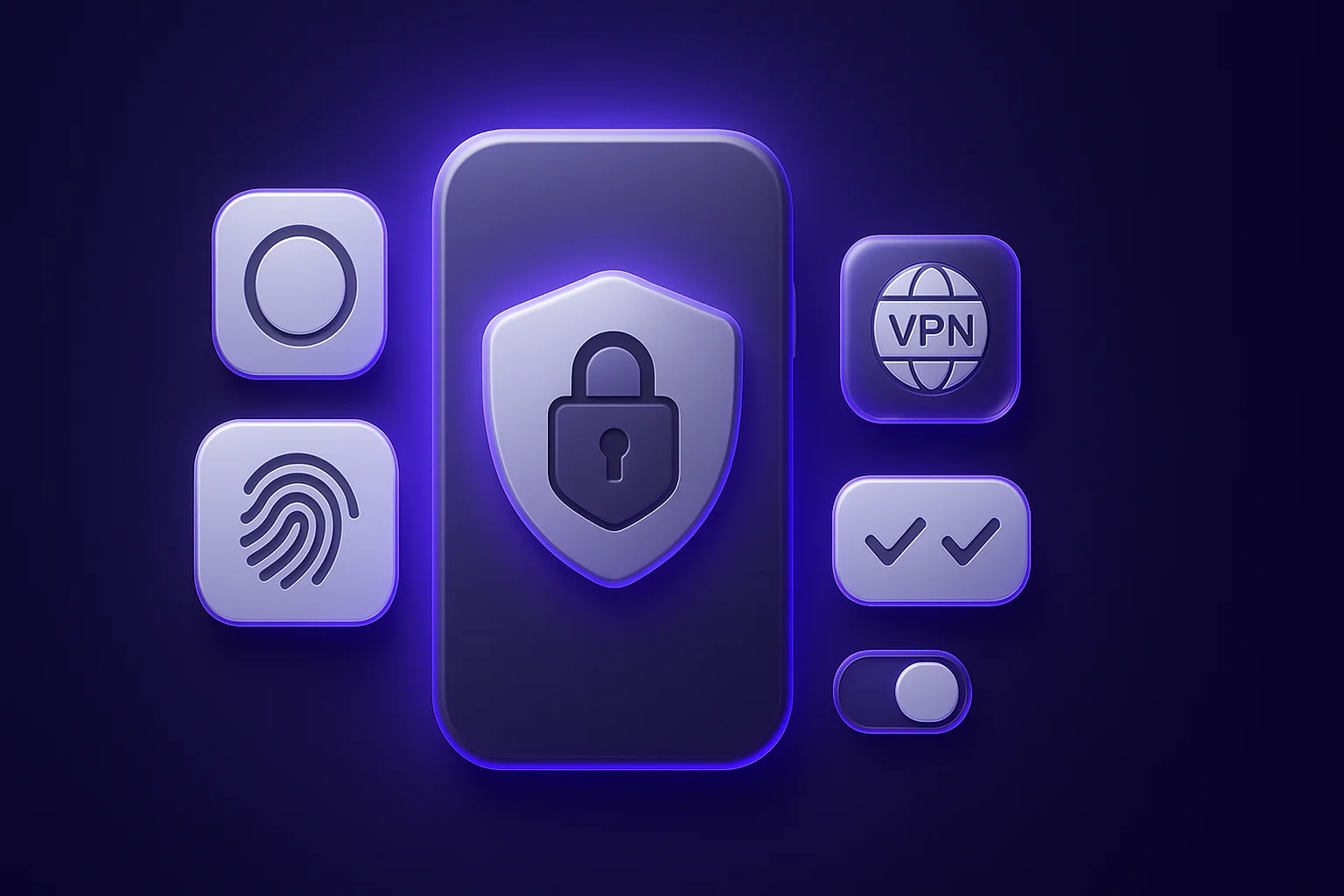
The Android VpnService API lets an app route all of the device's network traffic through itself. That is how VPN clients, firewalls, and some ad blockers work, and it is an enormous amount of trust to hand an app: whatever holds the VPN can see, log, redirect, or modify everything the device sends and receives. There are two angles worth understanding. If your app uses VpnService, you carry that responsibility and Google Play's policy on it is strict. And whether or not it does, your app's sensitive traffic can pass through some other app's VPN, which is a reason to encrypt and pin regardless of the network. Here is how VpnService works and how to handle both sides.
Short answer
Android's VpnService lets an app capture and route all device network traffic, so it can inspect, log, redirect, or modify it. Per Android, creating a VPN requires explicit user consent and shows a persistent system indicator, and only one VPN can be active at a time. The risks are two-sided: a malicious app granted VPN consent can intercept all traffic, a serious privacy and security threat, and if your app uses VpnService you hold that traffic and must handle it responsibly under Google Play's strict VPN policy. To protect your own sensitive traffic from any VPN on the device, rely on application-layer TLS and, for high-value connections, certificate pinning, so that even traffic passing through a VPN cannot be read or altered. Treat the network as untrusted regardless.
What you should know
VpnServiceroutes all device traffic: through the app holding the VPN.- It requires user consent and shows an indicator: and only one VPN runs at a time.
- A malicious VPN can intercept everything: a major privacy and security risk.
- Using it is a big responsibility: with a strict Google Play policy.
- Protect your traffic with TLS and pinning: do not trust the network.
What can VpnService do?
It can see and act on all device traffic, under consent. The table summarizes.
| Capability | Detail |
|---|---|
| Capture all traffic | Routes the device's network traffic through the app |
| Inspect or log | The app can read traffic it routes |
| Redirect or modify | Traffic can be sent elsewhere or altered |
| User consent required | A system dialog and a persistent indicator |
| One VPN at a time | Only a single active VPN on the device |
VpnService gives an app a virtual network interface through which the device's traffic flows, which is what makes legitimate VPN clients, on-device firewalls, and traffic-filtering tools possible. The same capability means the app can inspect the traffic it routes, and potentially log, redirect, or modify it, which is exactly why it is powerful and sensitive. Android gates it with explicit user consent through a system dialog, displays a persistent indicator while a VPN is active so the user knows their traffic is being routed, and allows only one active VPN at a time. These controls make the capability visible and consensual, but once a user grants it, the app holding the VPN is in a position of very high trust over everything the device communicates.
What are the risks, and what is your responsibility?
A malicious VPN is a serious threat, and using VpnService yourself carries heavy duties. The risk to users is stark: an app that obtains VPN consent, perhaps presented as a free VPN or a useful tool, can intercept all of the device's traffic, logging it, redirecting it, or attempting to tamper with it, which is among the most invasive things an app can do, even though the consent prompt and indicator give the user a chance to notice. If your own app uses VpnService, you take on that responsibility: you are routing users' traffic, so you must handle it with care, not log or exfiltrate it, be transparent about what you do, and comply with Google Play's policy for VPN apps, which restricts VpnService to appropriate core uses, requires disclosure, and forbids misusing the routed traffic. Google Play treats the VPN capability as high-risk and enforces specific requirements, so using it is not a casual decision. The separate, and universal, concern is that your sensitive traffic may pass through a VPN you do not control, which is a reason not to trust the network with anything in the clear.
How do you handle it, on both sides?
Use VpnService only with care and policy compliance, and protect your traffic from any VPN. If your app legitimately needs VpnService, treat the routed traffic as a serious responsibility: request consent transparently, use the capability only for the disclosed purpose, never log or transmit users' traffic beyond what the feature requires, and follow Google Play's VPN policy closely, since misuse is both an ethical problem and a policy violation that can remove your app. Apply least privilege to what you do with the traffic. On the other side, and this applies to every app, do not trust the network, because your traffic can pass through some other app's VPN or any intermediary: use TLS for all communication so traffic is encrypted end to end, and for high-value connections use certificate pinning, so that even an app holding a VPN cannot read or man-in-the-middle your sensitive traffic, only see encrypted bytes. Validate data server-side as always. The principle is that VpnService is a high-trust capability to use sparingly and responsibly, and that since you cannot assume the network path is clean, the protection for your own sensitive data is strong transport encryption and pinning rather than trust in the network.
What to watch out for
The first trap, if your app uses VpnService, is mishandling routed traffic or not meeting Google Play's VPN policy, which is both a serious breach of trust and a removal risk; use it only for a disclosed core purpose and never misuse the traffic. The second is assuming your traffic is safe on the network when a VPN app could be routing it; rely on TLS and, for sensitive connections, pinning. The third is users installing a malicious VPN, a reminder that the network is untrusted. A pre-submission scan such as PTKD.com (https://ptkd.com), which reads the compiled APK or AAB against OWASP MASVS, surfaces your permissions and whether your app uses secure transport, helping confirm sensitive traffic is encrypted regardless of the network path.
What to take away
- Android's
VpnServiceroutes all device traffic through the app holding the VPN, which can inspect, log, redirect, or modify it, gated by user consent, a persistent indicator, and one-VPN-at-a-time. - A malicious VPN app is a serious privacy and security threat, and using
VpnServiceyourself is a high-trust responsibility governed by a strict Google Play policy. - If you use it, handle routed traffic responsibly and comply with policy; regardless, protect your own sensitive traffic with TLS and certificate pinning, since it may pass through a VPN you do not control.
- Use a pre-submission scan such as PTKD.com to surface your permissions and confirm your app uses secure transport for sensitive traffic.