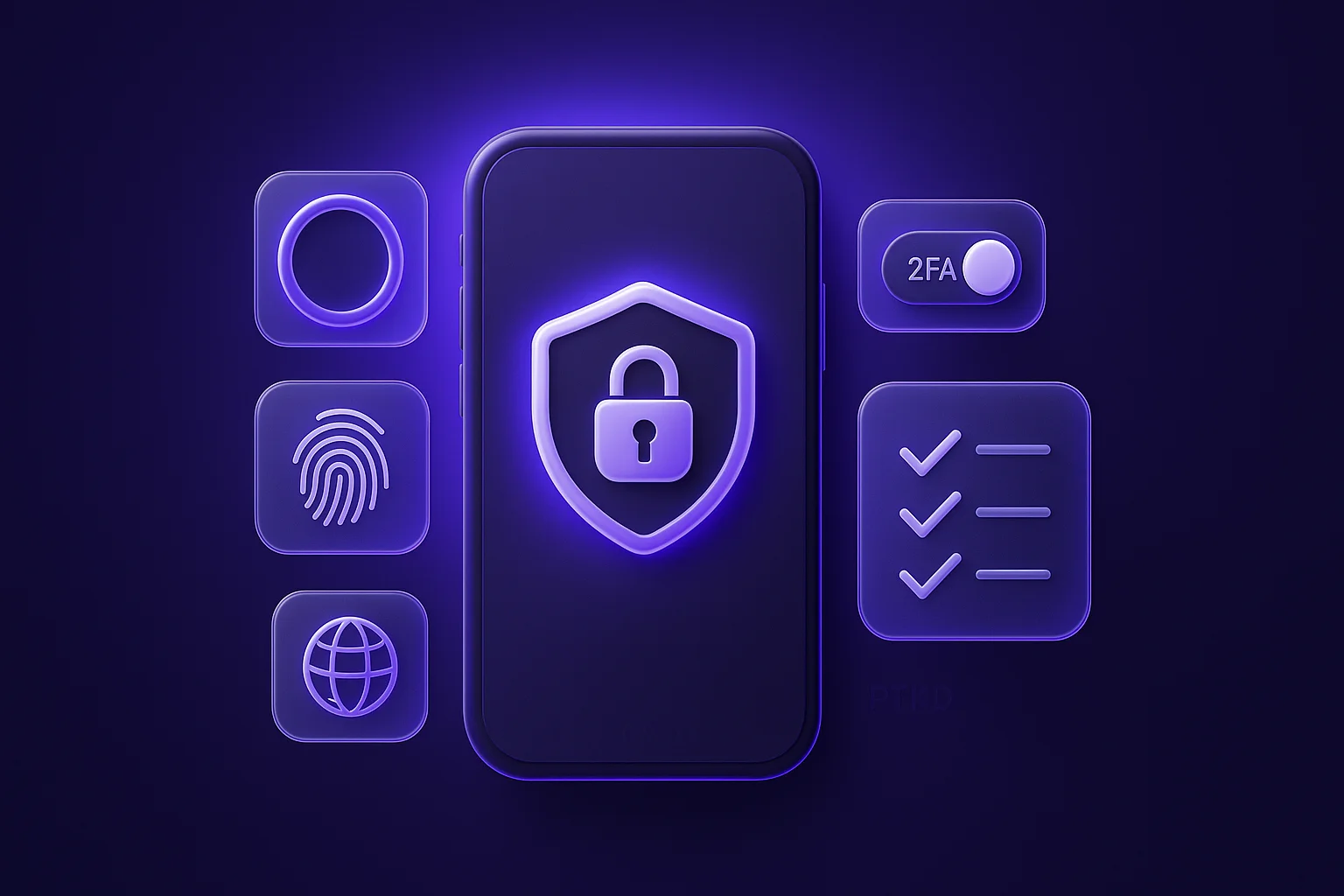
React Native Secure Storage and Keychain Guide
We provide a production-ready, OWASP MASVS–aligned guide for react native secure storage and keychain guide with concrete steps, examples, and rationale from real engagements.
Why it matters
Mobile apps run on untrusted devices and networks. We focus on secure defaults that scale across stacks like React Native, Flutter, Capacitor, and Kotlin/Swift.
Our approach
Coverage
- Data storage and secret handling
- TLS & certificate validation
- Modern cryptography
- Permissions & privacy
- Build & release hardening
What PTKD checks
Findings map to MASVS controls with evidence and actionable remediation.
How-To
- Export APK/IPA
- Upload or CI upload to PTKD
- Review categorized findings
- Implement fixes
- Re-scan and monitor trends
Best practices
- Least-privilege permissions and justification
- No hardcoded secrets; use platform keystores
- AES-GCM/ChaCha20-Poly1305
- TLS everywhere; consider pinning
- Separate debug and release; strip logs
FAQs
Does this work in CI?
Yes. Upload artifacts on PRs and nightly.
How long do scans take?
Usually minutes; larger or obfuscated builds may take longer.
Summary
Adopt repeatable security habits and run PTKD scans continuously to prevent regressions and ship safely.
We layer automation with clear human-readable guidance so teams fix faster and avoid regressions over time.